
Powering Payroll, Compliance & Workforce Management in the Philippines

Expand with confidence. Get local employment and payroll guidance backed by 30 years of experience.
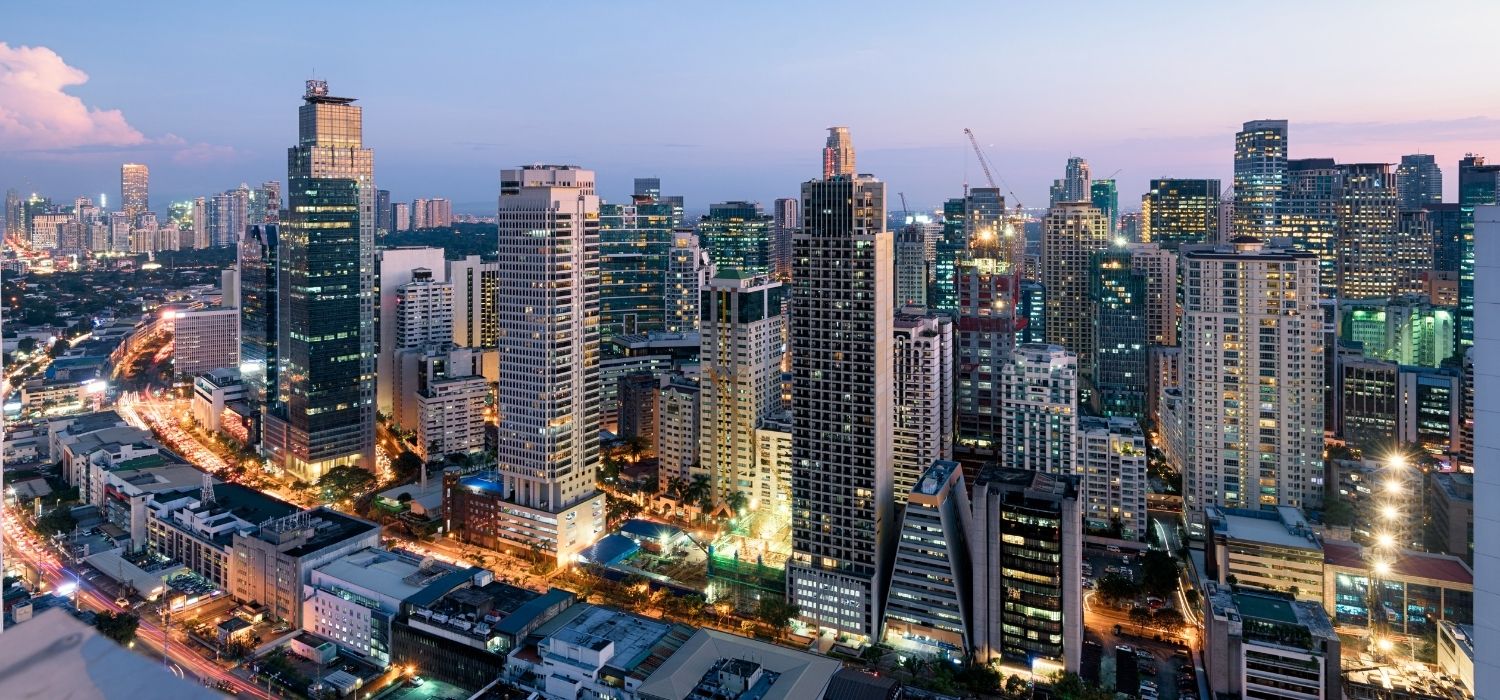
Makati City, financial and business capital of the Philippines.

Philippines at a Glance

Whether you're hiring your first employee or expanding an existing team, understanding the local employment landscape is essential. From visa requirements and statutory benefits to payroll taxes and regulatory oversight, this section provides a practical overview of what employers need to know to stay compliant and operate effectively in 

Philippines
Work Permits & Visas

Foreign nationals working in the Philippines generally require the appropriate immigration status and work authorisation. The most common route for foreign employees is the 9(g) Pre-arranged Employee Visa, which allows foreign nationals to work for a Philippine-based employer. A foreign worker generally requires a Philippine-based company to act as the petitioner. An Alien Employment Permit (AEP) may also be required from the Department of Labor and Employment, subject to applicable exemptions.

Payroll
  • Employers must register with the Bureau of Internal Revenue (BIR) and applicable social insurance agencies. 
  • Payroll is generally processed monthly, with employers responsible for withholding and remitting income tax and mandatory employee contributions.
  • Mandatory social insurance includes Social Security System (SSS), PhilHealth and Pag-IBIG contributions. 
  • SSS contributions are 15% of the applicable Monthly Salary Credit, 
    • Employer: 10% 
    • Employee: 5%
  • Employers also pay Employees’ Compensation Program contributions. 
  • Employers must withhold compensation income tax using the applicable BIR withholding tax tables and comply with periodic filing and reporting requirements.
Employment Contracts
  • Contract Types: Regular, probationary, project-based, seasonal, casual or fixed-term employment may be used, depending on the nature of the work.
  • Probation: Generally limited to six months. Employees who continue working after the probationary period are generally considered regular employees. 
  • Working Hours: Normal working hours should not exceed eight hours per day. Employees are generally entitled to at least a 60-minute meal period. 
  • Overtime: Paid at an additional 25% of the regular wage, with higher rates applying in certain circumstances such as holidays and rest days. Night-shift work between 10 p.m. and 6 a.m. attracts a minimum 10% night-shift differential. 
  • Minimum Wage: Minimum wage rates vary by region and are established by the relevant Regional Tripartite Wages and Productivity Boards rather than through a single national minimum wage. 
  • Termination: Regular employees may generally only be terminated for just cause or an authorized cause under the Labor Code. Procedural requirements apply, and employees terminated for authorised causes may be entitled to separation pay. 

Employee Benefits
  • Social Security: Employees are generally covered by SSS, PhilHealth and Pag-IBIG, with employer and employee contributions subject to statutory rates and contribution ceilings.
  • Annual Leave: Employees who have completed at least one year of service are generally entitled to five days of paid service incentive leave annually, subject to statutory exemptions. 
  • Sick Leave: There is no general statutory entitlement to a specific number of paid sick-leave days under the Labour Code, although employment contracts, company policies and collective agreements may provide additional leave.
  • Maternity Leave: Eligible employees are entitled to 105 days of paid maternity leave for live childbirth, with an additional 15 days for qualified solo parents. A 60-day benefit applies in cases of miscarriage or emergency termination of pregnancy.
  • Paternity Leave: Married male employees are generally entitled to seven days of paid paternity leave for the first four deliveries or miscarriages of their legitimate spouse.
  • Public Holidays: Employees are entitled to statutory holiday pay for regular holidays, subject to applicable exemptions. Work performed on a regular holiday generally attracts premium pay.
Tax Overview
  • Tax Residency: Philippine resident citizens are generally taxable on income from sources within and outside the Philippines. Resident aliens and non-resident aliens are generally subject to Philippine income tax on Philippine-source income, with the applicable treatment depending on their status.
  • Tax Year: January 1 – December 31.
  • Tax System: Progressive individual income tax rates apply to taxable income. From 2023 onwards, taxable income up to ₱250,000 is subject to 0%, while the top marginal rate is 35% on taxable income exceeding ₱8,000,000.
  • Non-Residents: A non-resident individual not engaged in trade or business in the Philippines is generally subject to a final tax of 25% on Philippine-source income, subject to applicable rules and treaty provisions.
Personal Income Tax
Taxable Income Over Taxable Income Not Over Tax Due
₱0 ₱250,000 0% of taxable income
₱250,000 ₱400,000 15% of the excess over ₱250,000
₱400,000 ₱800,000 ₱22,500 + 20% of the excess over ₱400,000
₱800,000 ₱2,000,000 ₱102,500 + 25% of the excess over ₱800,000
₱2,000,000 ₱8,000,000 ₱402,500 + 30% of the excess over ₱2,000,000
₱8,000,000 Above ₱8,000,000 ₱2,202,500 + 35% of the excess over ₱8,000,000

Full Country Guide

How We Help You with Payroll & Compliance in Ghana

Want the complete PDF guide for

Philippines

? We share detailed country guides covering payroll, tax, and compliance — and we send new updates regularly. Just send an email to solutions@praxima.com, and we’ll send it straight to your inbox.

Page 1 of ?

Global Payroll Solutions for Every Market

Expanding beyond

Philippines

? Discover how we support compliance and payroll operations in 70+ countries.

Why Global Companies Trust Us for Philippines Payroll

Trusted Payroll Solutions Backed by Decades of Experience

With over 30 years of experience managing payroll and compliance across continents, we’re a trusted partner to enterprises in

Philippines

and beyond.

Icon of a headset and shield symbolizing payroll support and security

Support

Experts with deep local knowledge guide you through every step—onboarding, payroll, compliance—ensuring smooth operations in

Philippines
Icon of a handshake inside a shield symbolizing trust in payroll services

Trust

Global enterprises and Fortune 500s rely on us for consistent, compliant payroll delivery across complex, multi-country environments

Icon of a globe with outward arrows symbolizing scalable global payroll

Scalable

Our solutions adapt as you grow, whether you're hiring your first local employee or scaling an international team

Icon of a document and shield symbolizing payroll compliance and accuracy

Compliance

Stay ahead of legal changes. We ensure your payroll and employment practices remain fully compliant with

Philippines

's laws

Let’s Talk Philippines

Whether you need Payroll Outsourcing, Employer of Record services, or advanced Payroll Software, our experts are here to help you find the right solution. Contact us today for support with payroll, compliance, and hiring in

Philippines