Powering Payroll, Compliance & Workforce Management in Nepal

Expand with confidence. Get local employment and payroll guidance backed by 30 years of experience.
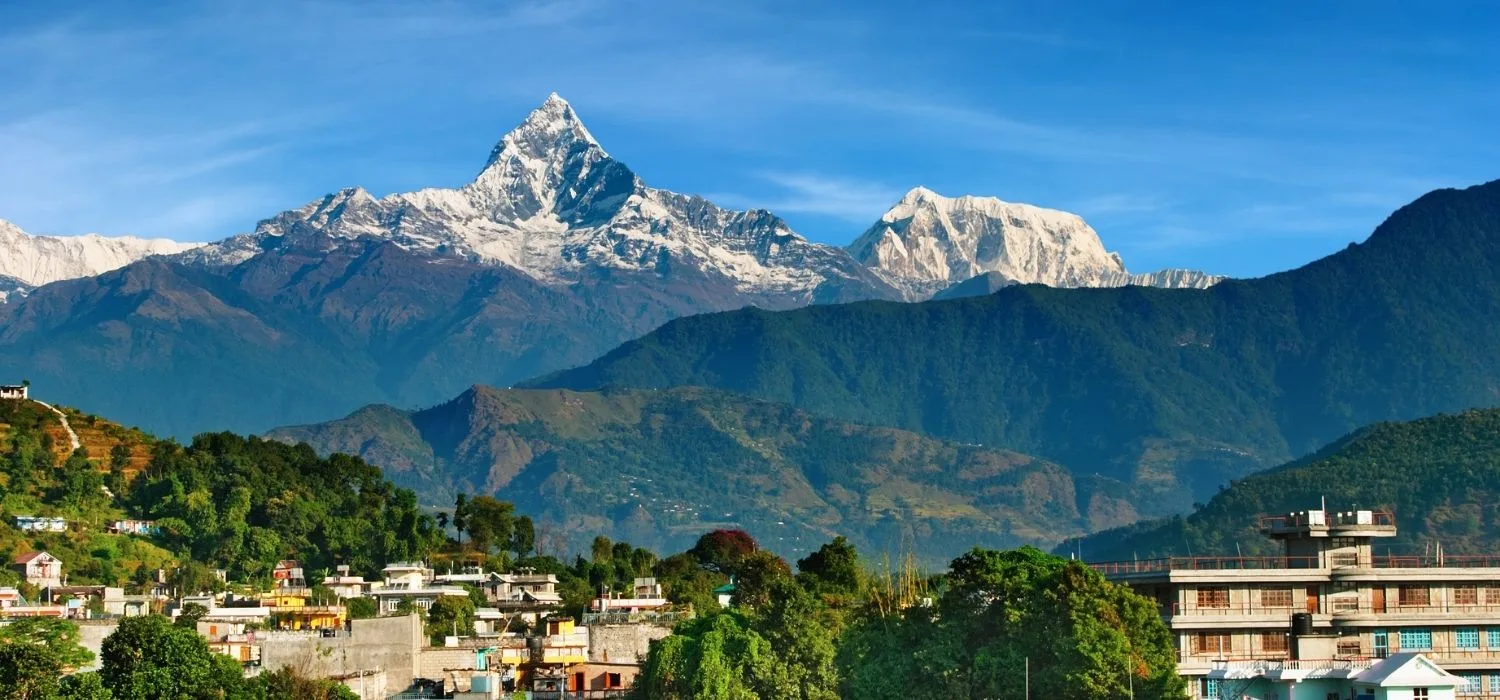
Nepal

Nepal at a Glance

Whether you're hiring your first employee or expanding an existing team, understanding the local employment landscape is essential. From visa requirements and statutory benefits to payroll taxes and regulatory oversight, this section provides a practical overview of what employers need to know to stay compliant and operate effectively in 

Nepal
Work Permits & Visas

Foreign nationals working in Nepal generally require a labour/work permit. Employers must demonstrate the need for foreign expertise where suitably qualified Nepali workers are unavailable, and the relevant work permit must be obtained before employment. Foreign workers also require the appropriate working/non-tourist visa, supported by the labour permit and employment agreement. Work permits are administered by Nepal’s Department of Labour and Occupational Safety.

Payroll
  • Employers must register with the relevant tax authorities and comply with Pay-As-You-Earn (PAYE) withholding requirements. 
  • Payroll is generally processed monthly, with employers responsible for calculating and withholding income tax and remitting statutory deductions. 
  • Nepal operates a mandatory Social Security Fund (SSF) for covered employees. Social security contributions are generally 20% for the employer and 11% for the employee, calculated on basic remuneration, for a combined contribution of 31%.
Employment Contracts
  • Contract Types: Employment may be permanent, fixed-term, work-based, casual, or other forms recognised under the Labour Act. Written employment contracts or employment particulars are required.
  • Probation: Up to six months.
  • Working Hours: Standard working hours are 8 hours per day and 48 hours per week. Overtime is permitted within statutory limits and is generally paid at 150% of the ordinary wage rate. Overtime may generally not exceed four hours per day or 24 hours per week. 
  • Notice Periods: At least 1 day for employment of up to four weeks; 7 days for employment of more than four weeks but not exceeding one year; and 30 days for employment exceeding one year. Pay in lieu may be provided where the required notice is not given. 
  • Termination: Employment may be terminated for legally recognised reasons, including expiry of a fixed-term or completion of project-based work, redundancy, misconduct, or other grounds permitted under the Labour Act. Employers must generally provide proper and sufficient grounds for termination.
  • Severance: Statutory severance and gratuity obligations may apply depending on the circumstances of termination and the employee's participation in the Social Security Fund.
Employee Benefits
  • Social Security: Employees generally contribute 11% of basic remuneration to the Social Security Fund, while employers contribute 20%. The employer contribution incorporates pension, gratuity and other social protection components. 
  • Annual Leave: Home leave is generally provided at one day for every 20 days worked, which equates to approximately 18 days for a full year of continuous work. Accumulation is permitted subject to statutory limits. 
  • Sick Leave: 12 days of paid sick leave per year. Sick leave may be accumulated up to 45 days subject to statutory conditions. 
  • Maternity Leave: 14 weeks of maternity leave. The first 60 days are paid, with social security arrangements potentially covering applicable maternity benefits. Additional unpaid leave may be available where medically required.
  • Paternity Leave: 15 days of paid paternity leave. 
  • Public Holidays: Employees are generally entitled to statutory public holidays, with additional provisions applying to female employees in certain circumstances.
  • Festival Allowance: Employees are generally entitled to a festival allowance equivalent to one month's basic remuneration each year. 
  • Insurance: Employers are subject to statutory employee protection and insurance requirements, including provisions relating to medical and accident coverage.
  • The current national minimum wage is NPR 19,550 per month, effective from July 2025.
Tax Overview
  • Tax Residency: Individuals are generally treated as resident where they meet the applicable residence or ordinary-abode tests under Nepalese tax law. Residents are generally subject to Nepalese taxation under the applicable resident rules, while non-residents are taxed on Nepal-source income.
  • Non-Residents: Non-resident individuals are generally subject to a 25% flat tax rate on taxable Nepal-source income. 
  • Tax Year: Nepal's income tax year runs from approximately mid-July to mid-July, corresponding to the Nepali fiscal year.
  • System: Nepal uses a progressive personal income tax system. For FY 2025/26, the standard resident individual rates range from 1% to 39%, with the 1% first-bracket charge functioning as Social Security Tax for taxpayers not covered by the relevant SSF arrangements. 
  • Double Taxation Treaties: Nepal has entered into double taxation agreements with a number of countries.
Personal Income Tax
Taxable Income (NPR) Tax Rate Tax Calculation
Up to 500,000 1% 1% of taxable income
500,001 – 700,000 10% NPR 5,000 + 10% of income over NPR 500,000
700,001 – 1,000,000 20% NPR 25,000 + 20% of income over NPR 700,000
1,000,001 – 2,000,000 30% NPR 85,000 + 30% of income over NPR 1,000,000
2,000,001 – 5,000,000 36% NPR 385,000 + 36% of income over NPR 2,000,000
Over 5,000,000 39% NPR 1,465,000 + 39% of income over NPR 5,000,000

Full Country Guide

How We Help You with Payroll & Compliance in Ghana

Want the complete PDF guide for

Nepal

? We share detailed country guides covering payroll, tax, and compliance — and we send new updates regularly. Just send an email to solutions@praxima.com, and we’ll send it straight to your inbox.

Page 1 of ?

Global Payroll Solutions for Every Market

Expanding beyond

Nepal

? Discover how we support compliance and payroll operations in 70+ countries.

Why Global Companies Trust Us for Nepal Payroll

Trusted Payroll Solutions Backed by Decades of Experience

With over 30 years of experience managing payroll and compliance across continents, we’re a trusted partner to enterprises in

Nepal

and beyond.

Icon of a headset and shield symbolizing payroll support and security

Support

Experts with deep local knowledge guide you through every step—onboarding, payroll, compliance—ensuring smooth operations in

Nepal
Icon of a handshake inside a shield symbolizing trust in payroll services

Trust

Global enterprises and Fortune 500s rely on us for consistent, compliant payroll delivery across complex, multi-country environments

Icon of a globe with outward arrows symbolizing scalable global payroll

Scalable

Our solutions adapt as you grow, whether you're hiring your first local employee or scaling an international team

Icon of a document and shield symbolizing payroll compliance and accuracy

Compliance

Stay ahead of legal changes. We ensure your payroll and employment practices remain fully compliant with

Nepal

's laws

Let’s Talk Nepal

Whether you need Payroll Outsourcing, Employer of Record services, or advanced Payroll Software, our experts are here to help you find the right solution. Contact us today for support with payroll, compliance, and hiring in

Nepal