Powering Payroll, Compliance & Workforce Management in Croatia

Expand with confidence. Get local employment and payroll guidance backed by 30 years of experience.
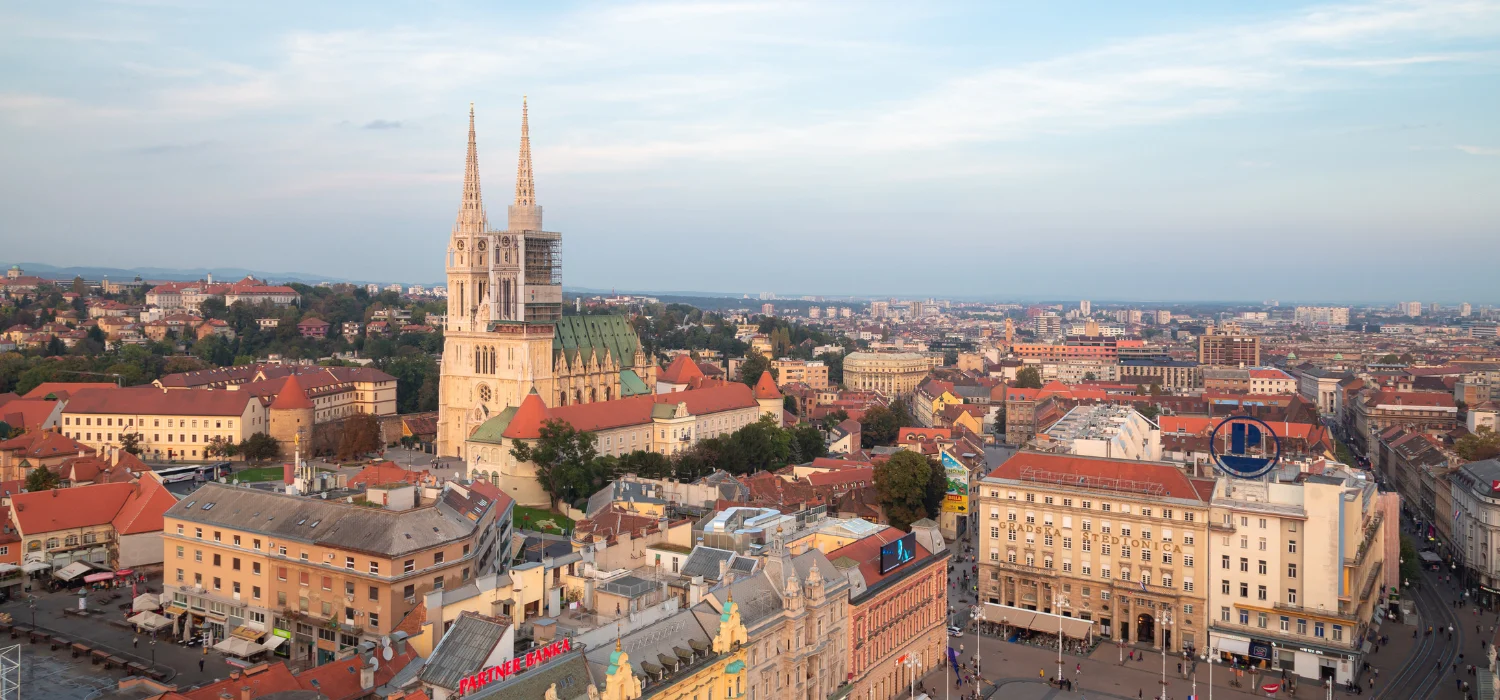
Croatia at a Glance

Whether you're hiring your first employee or expanding an existing team, understanding the local employment landscape is essential. From visa requirements and statutory benefits to payroll taxes and regulatory oversight, this section provides a practical overview of what employers need to know to stay compliant and operate effectively in 

Croatia
Work Permits & Visas

EU/EEA and Swiss nationals generally do not require a work permit to work in Croatia. Third-country nationals generally require a combined residence and work permit, unless they fall within an exemption. Employers may need to complete a labour market test and obtain an opinion from the Croatian Employment Service before applying for a permit. 

EU Blue Cards are available for highly qualified third-country nationals who meet the applicable qualification and salary requirements. Permits are generally issued for the duration of the employment contract, subject to statutory maximum periods.

Payroll
  • Payroll is generally processed monthly.
  • Employers are responsible for calculating, withholding and remitting income tax and mandatory social security contributions on employees' behalf.
  • Salaries must be stated as gross amounts in employment contracts. 
  • Social Security Contributions:
    • Employee: 20% for pension insurance
    • Employer: 16.5% for health insurance
    • Total: 36.5%
  • The employee pension contribution consists of 15% for the first pillar and 5% for the second pillar. The employer health contribution is generally 16.5% of gross salary. 
  • Minimum Wage: EUR 1,050 gross per month for 2026.
  • Employers also have payroll reporting obligations through the JOPPD system, which consolidates information on employment income, income tax and social contributions.
Employment Contracts
  • Contract Types: Permanent or fixed-term. Fixed-term contracts are permitted where there is an objective reason and are generally limited to three successive contracts with the same employer, with a combined duration of up to three years. 
  • Probation: Up to six months. The notice period during probation is at least one week. 
  • Working Hours: Full-time work is generally limited to 40 hours per week. Overtime may increase total working time to a maximum of 50 hours per week and is subject to statutory annual limits, unless a collective agreement provides otherwise. Overtime must be compensated at an increased rate. 
  • Annual Leave: At least four weeks per year. Employees who are newly employed generally acquire the full annual leave entitlement after six months of continuous employment. 
  • Termination: Termination must generally be provided in writing, with reasons stated where required. Statutory notice periods range from two weeks to three months depending on length of service. 
  • Severance: Generally required where an employee with at least two years of continuous service is dismissed, except in specified circumstances. Statutory severance is at least one-third of the employee's average monthly salary for each completed year of service.
Employee Benefits
  • Annual Leave: At least four weeks of paid annual leave per year, plus public holidays. Collective agreements or employment contracts may provide additional leave. 
  • Sick Leave: Employees are entitled to sick leave where medically certified. Compensation is subject to statutory rules and, depending on the circumstances and duration, may be borne by the employer or Croatian Health Insurance Fund.
  • Maternity Leave: Maternity leave begins 28 days before the expected birth, or earlier in certain circumstances, and the compulsory portion runs for 98 days — 28 days before birth and 70 days after birth. Maternity leave can continue until the child reaches six months, subject to the applicable statutory arrangements. Compensation is generally 100% of the relevant salary basis where the eligibility requirements are met.
  • Paternity Leave: Fathers are entitled to 20 working days of paid paternity leave for one child and 30 working days for twins or multiple births. The entitlement was increased effective 1 March 2025. 
  • Parental Leave: Parents may use parental leave after the child reaches six months, generally until the child reaches eight years, subject to the applicable duration and conditions. 
  • Public Holidays: Employees are entitled to statutory public holidays in addition to annual leave.
Tax Overview
  • Tax Residency: Individuals are generally considered Croatian tax residents where they have a home at their disposal in Croatia for at least 183 days in one or two calendar years or are physically present in Croatia for at least 183 days in one or two calendar years. Double taxation agreements may affect the final determination of residence. 
  • Non-Residents: Generally taxed on Croatian-source income, subject to applicable tax treaties.
  • Tax Year: January 1 – December 31.
  • Personal Income Tax: Croatia uses progressive personal income tax rates. For employment and other relevant income, local authorities determine the applicable rates within statutory ranges. The current framework provides rates of 15%–23% up to EUR 60,000 of annual taxable income and 25%–33% above EUR 60,000, depending on the local authority. 
  • Personal Allowance: The standard personal allowance is EUR 600 per month, or EUR 7,200 annually, with additional allowances available for qualifying dependants. 
  • Double Taxation Treaties: Croatia has an extensive network of double taxation agreements.
Personal Income Tax
Taxable Income Tax Rate Tax Calculation
Up to €60,000 per year 15%–23% Taxable income × applicable local tax rate
Over €60,000 per year 25%–33% Tax on €60,000 + applicable rate on income above €60,000

Full Country Guide

How We Help You with Payroll & Compliance in Ghana

Want the complete PDF guide for

Croatia

? We share detailed country guides covering payroll, tax, and compliance — and we send new updates regularly. Just send an email to solutions@praxima.com, and we’ll send it straight to your inbox.

Page 1 of ?

Global Payroll Solutions for Every Market

Expanding beyond

Croatia

? Discover how we support compliance and payroll operations in 70+ countries.

Why Global Companies Trust Us for Croatia Payroll

Trusted Payroll Solutions Backed by Decades of Experience

With over 30 years of experience managing payroll and compliance across continents, we’re a trusted partner to enterprises in

Croatia

and beyond.

Icon of a headset and shield symbolizing payroll support and security

Support

Experts with deep local knowledge guide you through every step—onboarding, payroll, compliance—ensuring smooth operations in

Croatia
Icon of a handshake inside a shield symbolizing trust in payroll services

Trust

Global enterprises and Fortune 500s rely on us for consistent, compliant payroll delivery across complex, multi-country environments

Icon of a globe with outward arrows symbolizing scalable global payroll

Scalable

Our solutions adapt as you grow, whether you're hiring your first local employee or scaling an international team

Icon of a document and shield symbolizing payroll compliance and accuracy

Compliance

Stay ahead of legal changes. We ensure your payroll and employment practices remain fully compliant with

Croatia

's laws

Let’s Talk Croatia

Whether you need Payroll Outsourcing, Employer of Record services, or advanced Payroll Software, our experts are here to help you find the right solution. Contact us today for support with payroll, compliance, and hiring in

Croatia